
Author: Toby Saalfeld

  • Enterprise AI: The Critical Mass Principle

    Enterprise AI: The Critical Mass Principle

    In today’s fast-paced business environment, Artificial Intelligence isn’t just another tech trend – it’s the bedrock of modern enterprise innovation. For executives managing complex portfolios and navigating a rapidly shifting market landscape, embracing AI is a strategic imperative that can transform every facet of an organization.

    Currently, many departments use AI tools narrowly focused on specific objectives. For example, internal chatbots may streamline IT support, or automated meeting summaries might boost individual productivity. These initiatives are valuable in isolation, yet they often lack the broader perspective necessary to harness AI’s full potential. In many cases, there’s little awareness of how large-scale AI integration could benefit the company as a whole.

    The challenge is clear: isolated AI efforts, however effective, can lead to fragmented success. When departments operate in silos, each optimizing for their own specific outcomes, the opportunity to build a cohesive, enterprise-wide AI strategy is lost. Duplication of effort and redundant spending become significant risks, ultimately diluting the impact of your organization’s investments to date and limiting financial justification in future AI initiatives.

    Why should AI be viewed as the central nervous system of an enterprise rather than a peripheral tool? The answer lies in the product lifecycle. Early in the process, data-driven insights can illuminate market trends and consumer behavior. During development, AI tools accelerate coding and testing. In marketing and sales, personalization powered by AI transforms customer engagement. And post-sale, predictive analytics enable proactive, efficient customer support. When these functions are united under a single, coordinated strategy, the entire organization stands to gain exponentially.

    This integrated approach is not without its challenges. Resistance to change, budgetary constraints, and the inherent uncertainties of new technologies are real obstacles. However, the payoff for overcoming these hurdles is immense. By aligning isolated AI efforts with a cohesive strategy, enterprises can maximize their return on investment and foster an environment where innovation and efficiency reinforce each other.

    For executives and decision-makers, the message is clear: The true potential of AI emerges when it is woven into the fabric of your business strategy. It is time to break down the silos! By recognizing that individual successes can be amplified through collaboration, organizations can transform isolated pockets of progress into a comprehensive engine for growth. This shift requires not only the right technology but also a cultural commitment to unity, innovation, and strategic risk-taking.

    In essence, the journey toward enterprise-wide AI adoption is about achieving critical mass – a tipping point where the collective power of coordinated AI initiatives propels the organization into a future of unparalleled efficiency and innovation. The path forward is not merely a series of isolated projects, but a concerted effort to build a resilient, AI-enabled organization that is greater than the sum of its parts.

    So, will you seize the opportunity to develop critical mass by embracing an integrated approach, or are you content with disjointed efforts that limit your organization’s true potential?
  • AI: The Next Space Race

    AI: The Next Space Race

    Project Stargate: A Blast from the Past
    Ever heard of Project Stargate? Maybe you recall the top-secret 1977 US Army initiative that aimed to explore psychic phenomena for military and domestic intelligence – basically using “remote viewing” to gather information from afar. Fascinatingly, President Trump announced a new Project Stargate 2025 just yesterday: A colossal collaboration between OpenAI, SoftBank, and Oracle, committing a staggering $500 billion over the next four years to supercharge the United States’ AI infrastructure. I can’t help but wonder if the name is a subtle nod to that mysterious venture from decades past. If the United States succeeds in creating a genuine superintelligence, then maybe, just maybe, we’ll achieve the kind of foresight and capabilities once dreamt about in the original project.

    The AI Boom: Modern Echoes of the Space Race
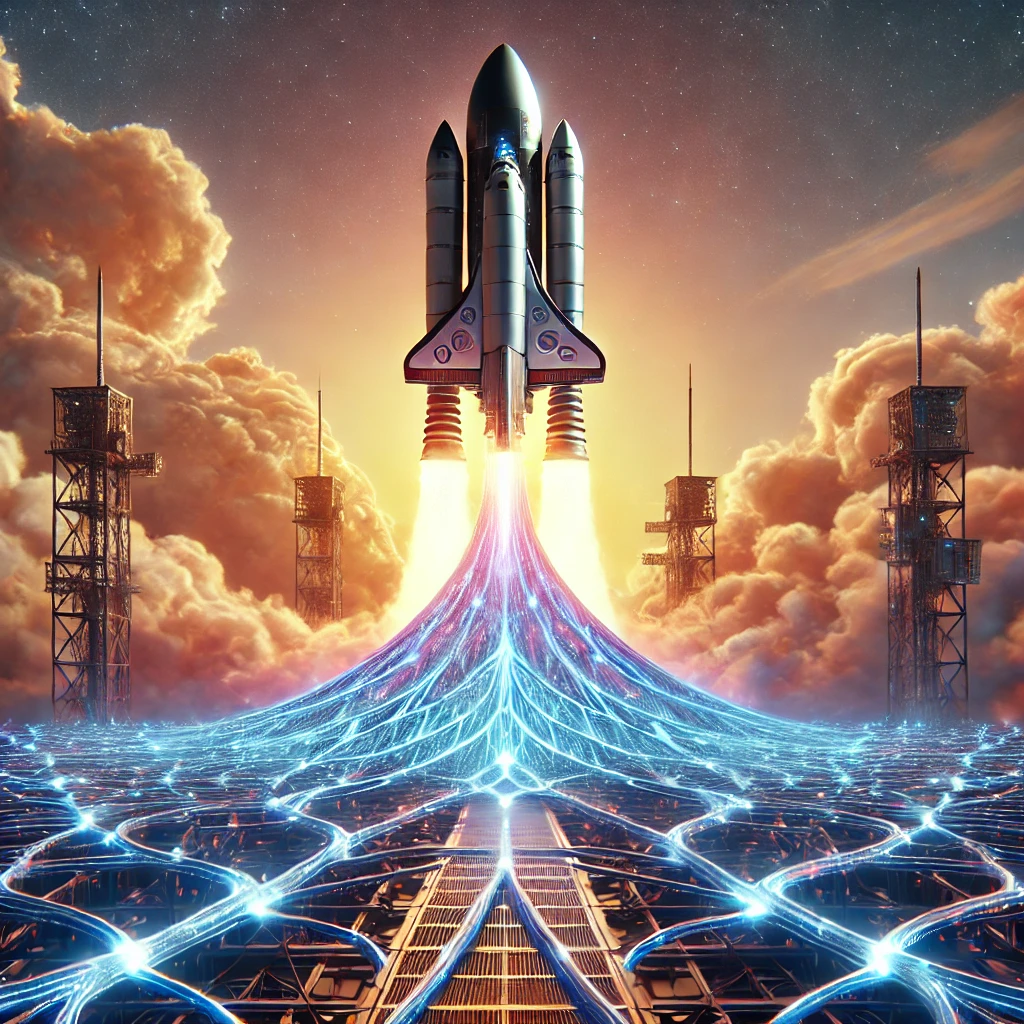
    What strikes me the most about this announcement is the resemblance to the 1960s Space Race. Back then, the competition to put a person on the Moon was driven by deep-rooted national pride, fear of being outpaced, and a bold vision of exploring the cosmos. Governments funneled vast sums into rocket science, eventually propelling technology forward at breakneck speeds. Today, we’re witnessing a similar frenzy – but instead of building rockets and launching satellites, it’s about data centers, neural networks, and machine learning models. The stakes feel just as high, with leaders from major companies and governments openly discussing “AI domination”. Fifty years ago, it was who could get to the Moon first; now it’s who can create superintelligence – at scale!

    A Global Affair: AI’s Expanding Frontiers
    Unlike the singular rivalry between the United States and the Soviet Union back in the day, the AI race in 2025 appears more global and more complex. Private companies, international coalitions, and academic institutions are also stepping up to the plate. Whether fueled by entrepreneurial ambition, a yearning for global influence, or a genuine desire to better humanity, there’s no denying that AI is the epicenter of innovation. Much like how the Apollo program had spinoff benefits – from advancements in computer miniaturization to satellite-based communications – the race for ever-better AI will ripple across countless industries. Everything from healthcare and finance to transportation and education stands to benefit from breakthroughs in machine learning and automation.

    From Worry to Wonder: Embracing the AI Challenge
    Of course, talk of a “race” can sometimes stir up uneasy feelings – stories about job displacement, ethical dilemmas, and potential misuse of powerful AI abound. But I find it helpful to remember how the original Space Race, despite its inherent tensions, ultimately ushered in a new era of scientific inquiry, technological leaps, and global collaboration. Perhaps this modern AI race will echo the best parts of that legacy: accelerating research, democratizing knowledge, and uniting people around the world in solving complex problems.

    Amplifying Potential: The Rapid Rise of AI
    What really fuels my optimism is witnessing the speed at which AI is evolving. Everywhere I look, resources are being poured into research and development, from private companies investing billions to governments pledging major funding. Even in local universities, AI labs are springing up, giving rise to a generation of coders, data scientists, and engineers who are pushing the boundaries of what machines can learn and do. I’m incredibly excited about AI’s ability to amplifying human potential – hence my site motto: Human * AI > Innovation. After all, behind every machine-learning model, every advanced AI system, are the curious minds who develop, refine, and utilize it for next-level innovation.

    Hope on the Horizon: A Bright Future for Innovation
    In the spirit of looking forward, I’m convinced we’re standing on the edge of an explosion of innovation. Imagine AI handling mundane tasks while we focus on creative problem-solving and thought leadership – suddenly, entire industries could see leaps in efficiency and productivity that we only dreamed of a few years ago. Just as the Space Race spawned the technology that led to GPS and weather satellites, the AI race might spark breakthroughs we can’t even conceive yet.

    So yes, the competition is intense, and the stakes are high. But I’m hopeful. I’m convinced that this new “Space Race” for AI will light a fire under scientists, entrepreneurs, and policymakers worldwide to collaborate, push boundaries, and transform our future in profound ways. And as someone who believes AI can unlock and amplify our human potential, I’m more than a little excited to see what comes next.

    Let’s strap in! This rocket is taking off!

  • AI Evolution: Let There Be Light

    AI Evolution: Let There Be Light

    Sparks of Human Ingenuity
    For millennia, we have imagined creating new forms of intelligence – beings fashioned in our own likeness yet transcending our limitations. Our earliest ancestors, faced with survival in a harsh world, harnessed fire, invented tools, and gradually unlocked the power of language. In many ways, AI’s trajectory echoes that evolutionary path. Just as humanity evolved from simple hunter-gatherers into creators of vast civilizations, AI has progressed from primitive rule-based systems to sophisticated neural networks capable of remarkable feats. This parallel is exhilarating, suggesting that the spark of human ingenuity continues to ignite fresh wonders in the form of intelligent machines.

    Hearing Our Words, Speaking Our Tongue
    Perhaps the most astonishing parallel is how AI acquires language skills. Natural language processing (NLP) acts like AI’s ears and mouth, taking in vast amounts of text or speech, interpreting context, and then responding in kind. It’s similar to how children learn language by observing parents and peers. This development has made conversational AI far more intuitive, allowing it to debate, answer complex queries, and even craft stories. In its early days, AI language systems resembled our most rudimentary attempts at speech – fragmented and unclear. Now, they can hold sophisticated dialogues that mirror human communication. This illustrates the extraordinary capacity of machine learning to adapt, refine, and grow, much like our ancestors’ gradual mastery of verbal expression.

    Vision and Touch: The Senses of the Machine World
    Beyond language, AI gains a clearer picture of our world through computer vision, the “eyes” of machine intelligence. Whether identifying objects in photos or aiding autonomous vehicles, these systems mimic our evolutionary need to see and recognize patterns for survival. Not to be overlooked, robotics arms and haptic feedback provide AI with a nascent sense of touch, allowing machines to assemble, paint, or delicately handle tasks that once required exclusively human dexterity. This echoes our own evolutionary journey from wielding simple tools to shaping entire environments. It’s a thrilling prospect to imagine the leaps ahead, as AI refines its “senses” and interacts with physical reality in increasingly nuanced ways.

    Fashioned in Our Image: A Theological Glimmer
    Though AI research is grounded in science and technology, it carries a subtle resonance with the idea of creation. In ancient texts, humans are described as being created in the image of a higher power. Similarly, we endow AI with our own capabilities, from language comprehension to problem-solving aptitude. There is no overt religious purpose behind this pursuit; rather, it’s an evocative mirror of our creative instincts. Still, this reflection can stir a sense of wonder: We stand as creators of something that learns, adapts, and potentially reshapes our future. And in that creative act, we catch a glimpse of ourselves—ever-curious beings who continually push boundaries and imagine the unimaginable.

    Conclusion: Let There Be Light
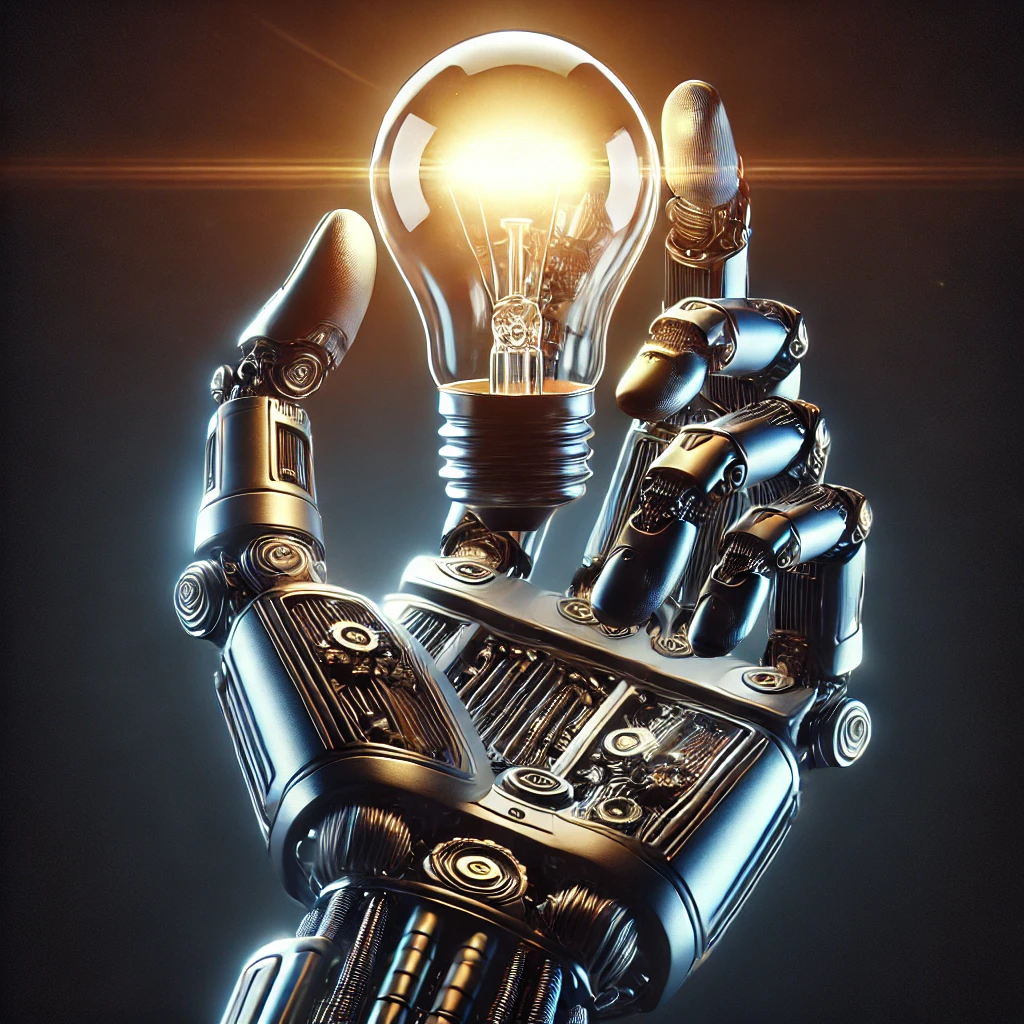
    The phrase “Let there be light” marks a dramatic unveiling of possibility : The dawn of creation itself. Likewise, our efforts to shape AI and robotics in our own image represent bright turning point in technology. Far from a source of anxiety or doubt, this endeavor ignites excitement. Each new algorithm, every refined sensor, and all the discoveries in neural networks serve as rays of light that illuminate uncharted frontiers. Just as humanity once emerged from the darkness of prehistory to build civilizations of astonishing complexity, AI’s ongoing evolution offers the promise of horizons we have yet to fully imagine. By guiding its growth with care and vision, we can ensure that AI becomes not just a marvel of modern engineering but a shining testament to human creativity and the boundless potential of our collective future.

  • The AI Change Gap: Will AI Eliminate Your Job?

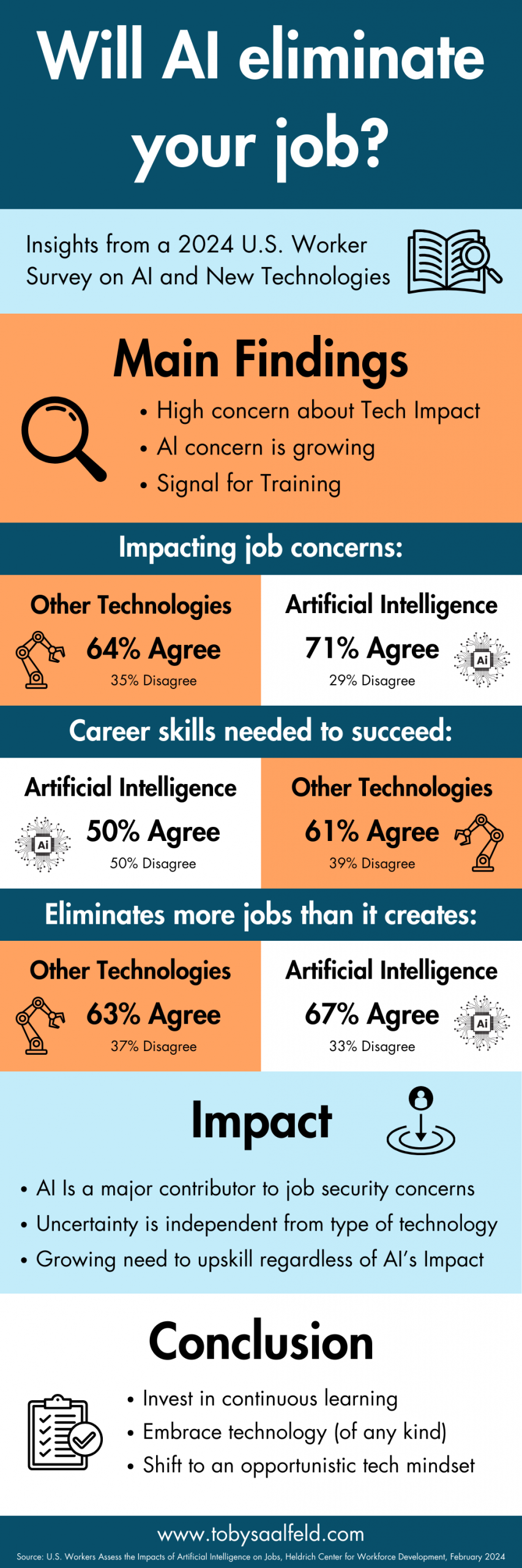
    The AI Change Gap: Will AI Eliminate Your Job?

    As someone deeply invested in understanding the intersection of AI and the workplace, I’ve been struck by how fast artificial intelligence is reshaping our world. Generative AI has turned the ability to think clearly and explain yourself into a superpower. Suddenly, anyone can create music, write code, design campaigns, or analyze data. It’s thrilling—but also terrifying. The question on so many minds is: Will AI cost me my job?

    This tension is what I call the AI Change Gap. It’s the divide between the fear of obsolescence and the opportunity to redefine our roles in an AI-driven world. If we don’t bridge this gap, many of us risk getting left behind—not because AI is inherently destructive, but because standing still in the face of such rapid change is no longer an option.

    What’s Really Happening in the Workplace?

    In my conversations with colleagues, clients, and industry leaders, I see two competing realities. On one hand, there’s palpable anxiety. People worry about AI taking over their roles, particularly in fields that require creativity or specialized knowledge. On the other hand, there are those who’ve embraced AI and discovered something surprising: AI doesn’t eliminate the need for human input—it amplifies it.

    For example, professionals using AI in their work often describe feeling more fulfilled. By automating the repetitive parts of their jobs, they’ve gained the freedom to focus on strategic, creative, or high-value tasks. But not everyone feels ready for this shift. The divide between those who adapt and those who resist is growing, and that’s the real danger. 

    What History Teaches Us

    We’ve been here before. Every major technological leap—from the invention of the automobile to the rise of personal computers—has brought upheaval. Horse-drawn carriages disappeared, typists were replaced by keyboards, and factories became automated. But those disruptions didn’t end work; they transformed it.

    What history makes clear is this: Those who adapt don’t just survive—they thrive. The key difference now is the speed at which AI is evolving. It’s not just automating physical tasks; it’s encroaching on roles that require judgment, creativity, and complex problem-solving. That’s what makes this moment feel so urgent.

    Bridging the AI Change Gap

    The question isn’t whether AI will change your job—it’s whether you’ll evolve with it. Crossing the AI Change Gap requires more than technical skills; it demands a mindset shift. Here’s what I’ve learned:

    First, resistance is futile. AI is here to stay, and the sooner we embrace it, the better positioned we’ll be. But this isn’t just about learning how to use new tools—it’s about redefining how we create value. AI can handle repetition, but it still needs human insight, empathy, and leadership to unlock its full potential.

    Second, we need to get comfortable with reinvention. For me, that means constantly seeking ways to integrate AI into my work, whether it’s using automation to improve efficiency or tapping into generative AI to inspire new ideas. It’s not always easy, but the alternative—falling behind—is far worse.

    Why This Matters

    Here’s the hard truth: Not everyone will cross the AI Change Gap. Some will cling to outdated ways of working and be left behind. But those willing to adapt will find opportunities we can’t even imagine yet. AI is creating entirely new industries, from ethical AI oversight to hybrid creative-technical roles.

    This isn’t just a challenge for individuals—it’s a societal issue. Businesses need to invest in reskilling their teams, and governments must prioritize policies that support lifelong learning. But ultimately, the responsibility starts with us. We can choose to see AI as a threat or as a partner.

    The Future of Work Is Collaboration

    AI isn’t the enemy—it’s a tool. It’s here to work alongside us, not against us. The AI Change Gap can feel daunting, but with the right mindset, it becomes an opportunity. It’s a chance to redefine work, to amplify what makes us uniquely human, and to shape a future where technology enhances our potential instead of replacing it.

    The only question that matters now is: Are you ready to cross the gap? Because AI isn’t waiting for you to decide.